|
The Village of Eight and the Sea Anchor Stones
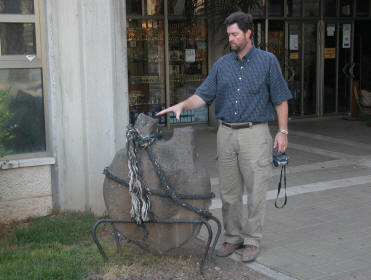
Kevin stands next to an example of large anchor stone found in the
Mediterranean area,
but
are much smaller than those which were used on Noah's Ark.
Large anchor stones were hung from the ark
to keep the ship facing the waves
About 15 miles from the ark is the village of Arzep,
formerly known as the Village of Eight, where the sea anchor stones were cut off
the ark and landed underwater in this area. Arzep is its old Armenian name,
but the Turks have a more contemporary name of Siglaksulu. We like to use
the Arzep older name. Arzep is also the
area where Noah's family lived after the Flood.
The region around the ark has a rich history of evidence
identifying this area as the correct landing place for the ark.
-
The valley below the ark is
interpreted as The Valley of
Eight.
-
The name for the mountain where the ark rests is
interpreted as Doomsday mountain.
-
The village where the majority of the anchor stones are found is
called Arzep or The Place of Eight.
The anchor stones were cut from the ark as the waters were
starting to
recede. We will look at the sea anchor stones or drogue stones found in this
village about 15 miles from the ark at the end of The Valley of Eight.
See Wikipedia and search for "sea anchors" to learn more about how they can keep
a ship facing oncoming waves when the stones were attached to the front of the
ship.
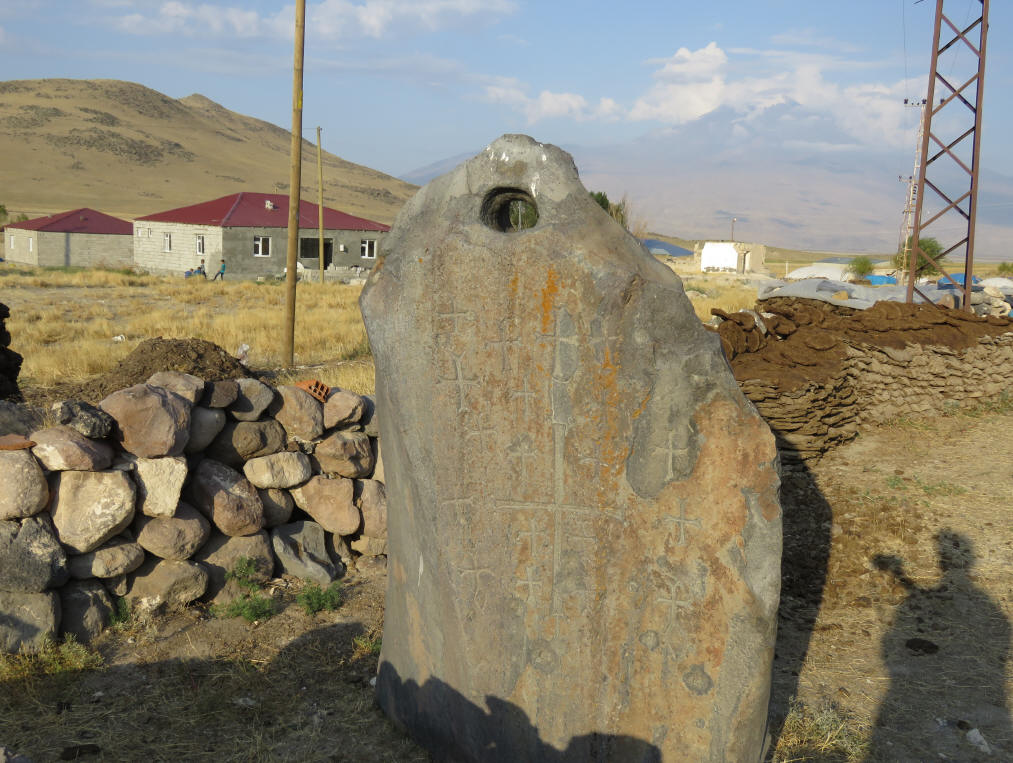
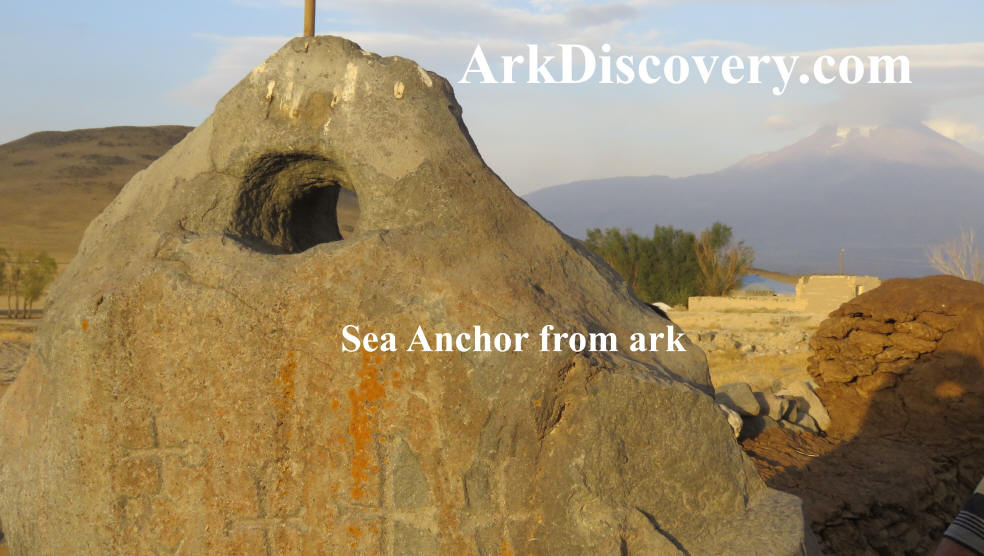
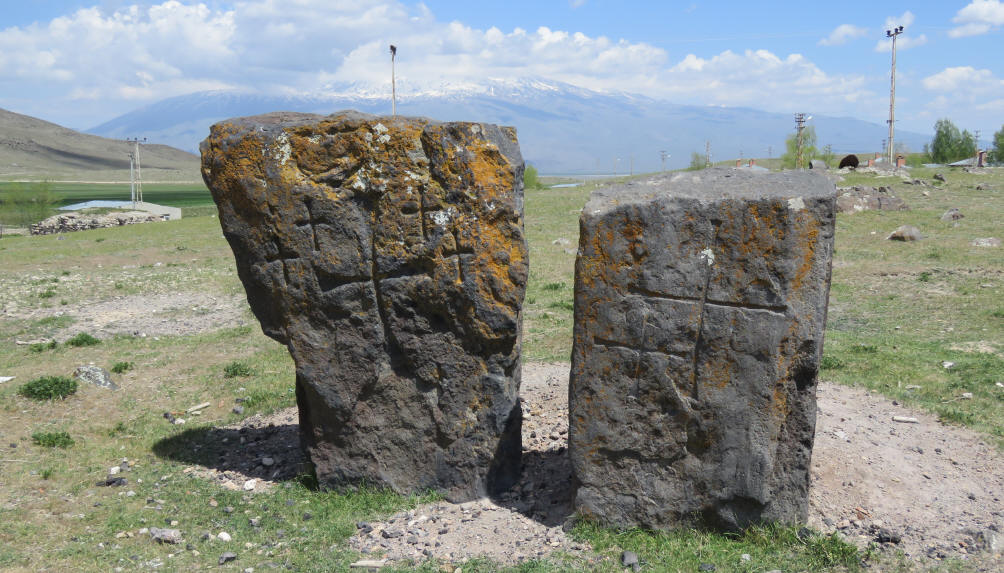
Above: Large sea anchor stands with crosses inscribed on
its face. Mount Ararat in distance. David Fasold said there is four
feet of stone in the ground.
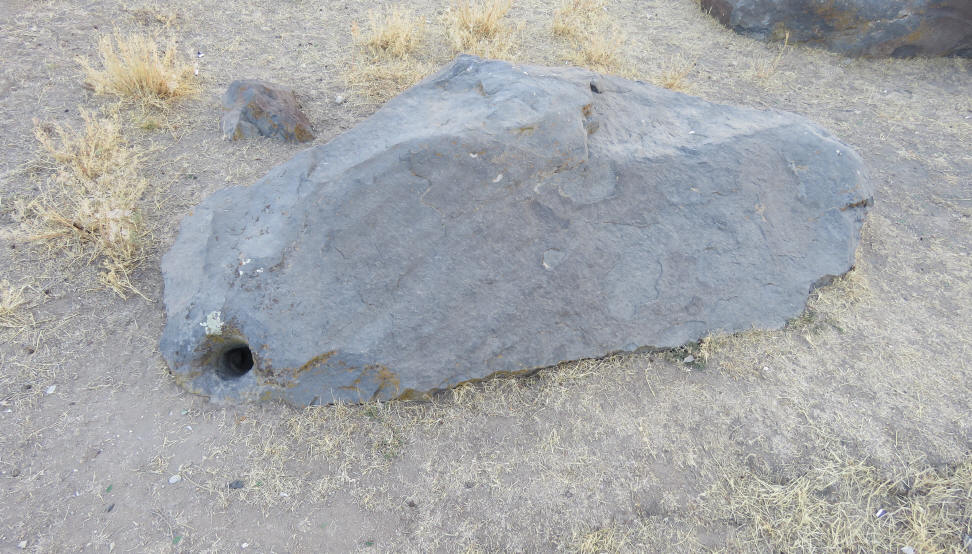
The
holes were drilled in the stones for a rope to be attached. drilling process was not a simple straight shaft through the rock. One
side was drilled a smaller diameter than the other. The holes were drilled
at an upward angle as large ropes would be lifting the stones. The smaller side
allowed a single rope to pass through. Next, a large knot was tied and
allowed to fit snuggly in the larger opening on the other side. If these
stones were lifted out of the water, the hole would break off at the top.
It was only in the water that these stones could be lifted successfully.
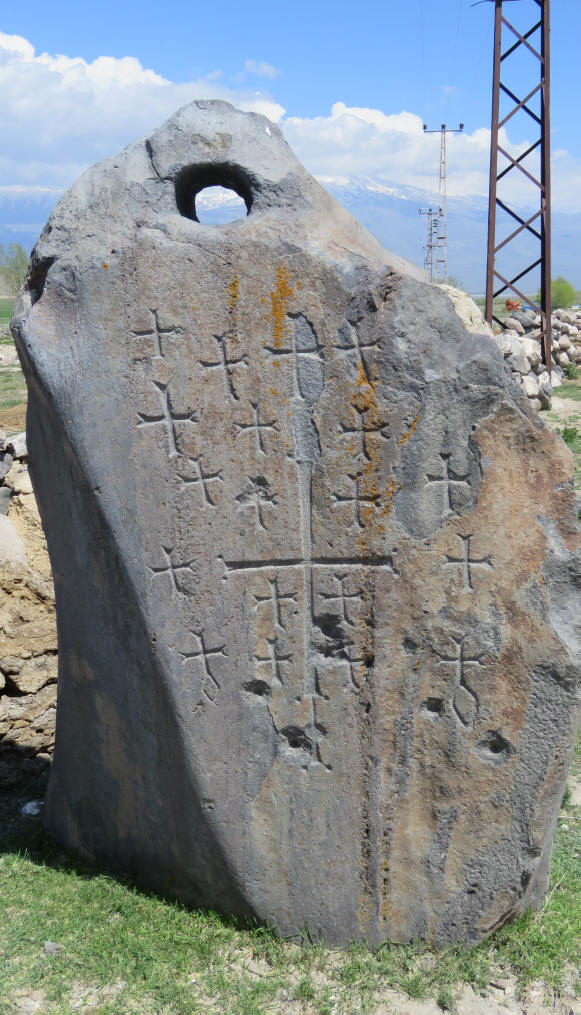
Another view of the same stone... Diamond shape represents Nimrod who came
from this area after the Flood.
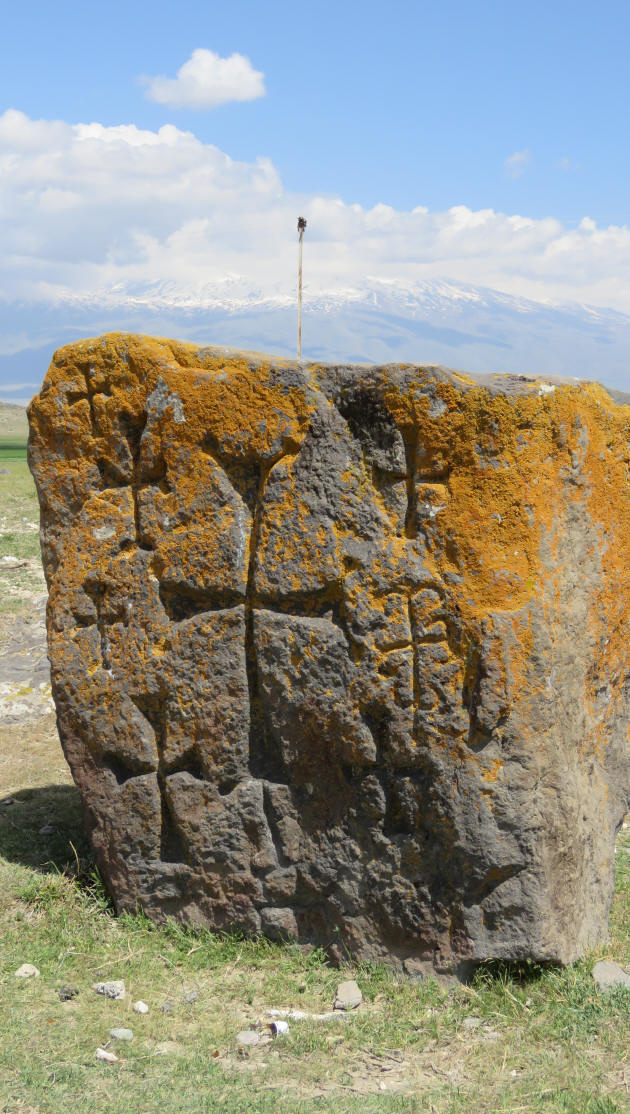
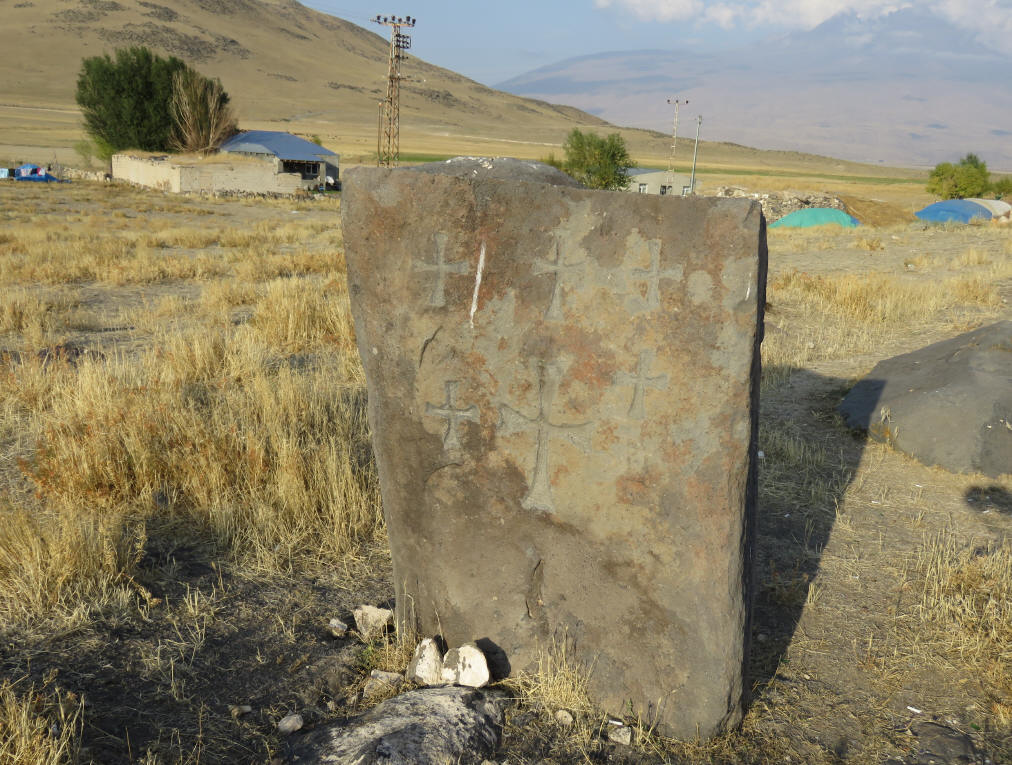
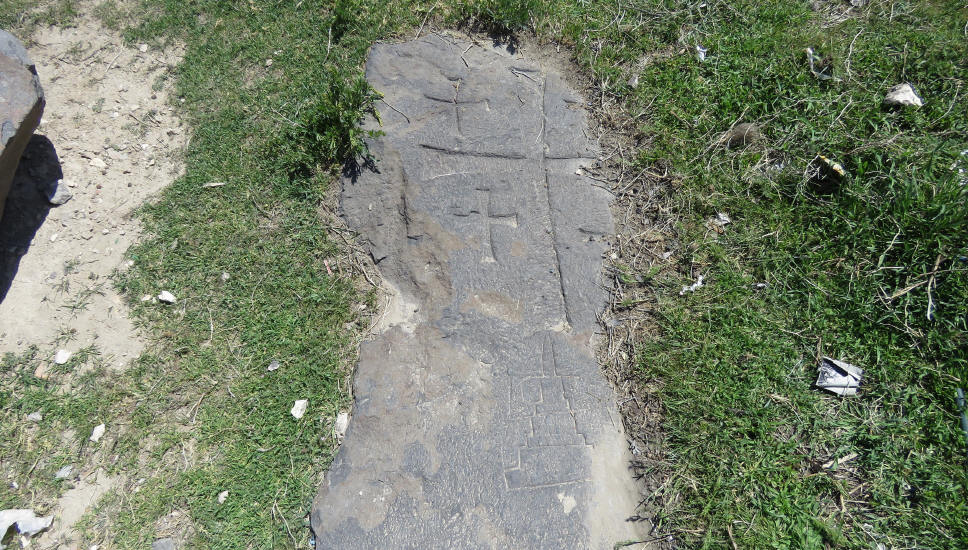
Above: This stone has a large cross in the middle
representing Noah, a second smaller in the lower left representing Mrs. Noah,
three smaller crosses
representing the three sons, and the three smallest crosses representing the
wives of the sons.
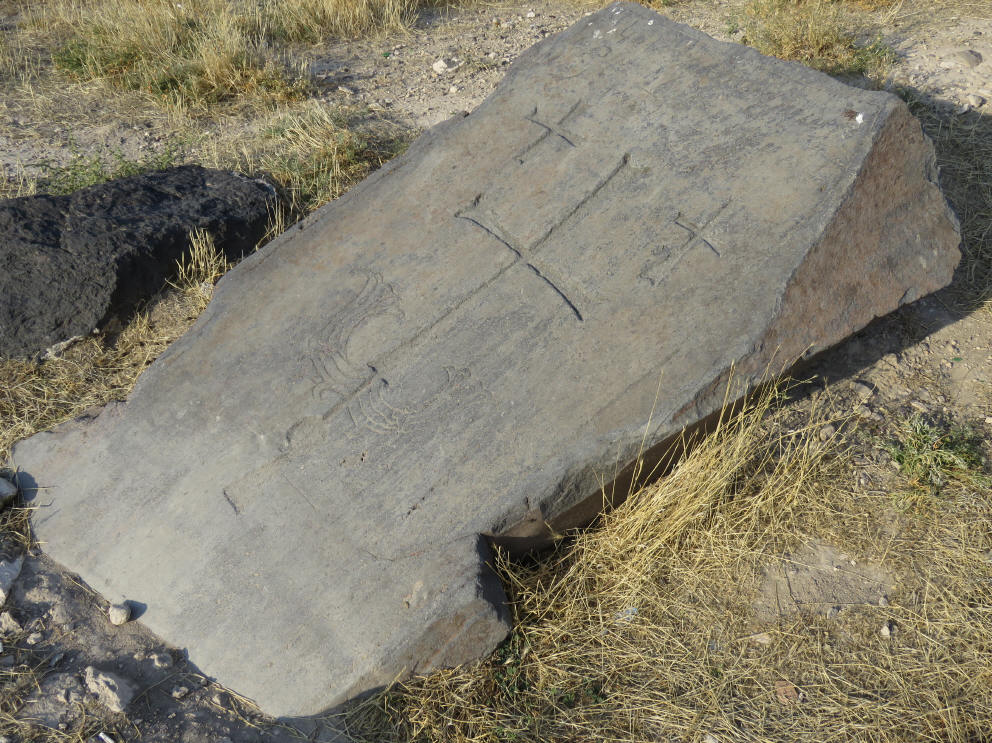
Above: Large stone with Armenian writing on the right
side.
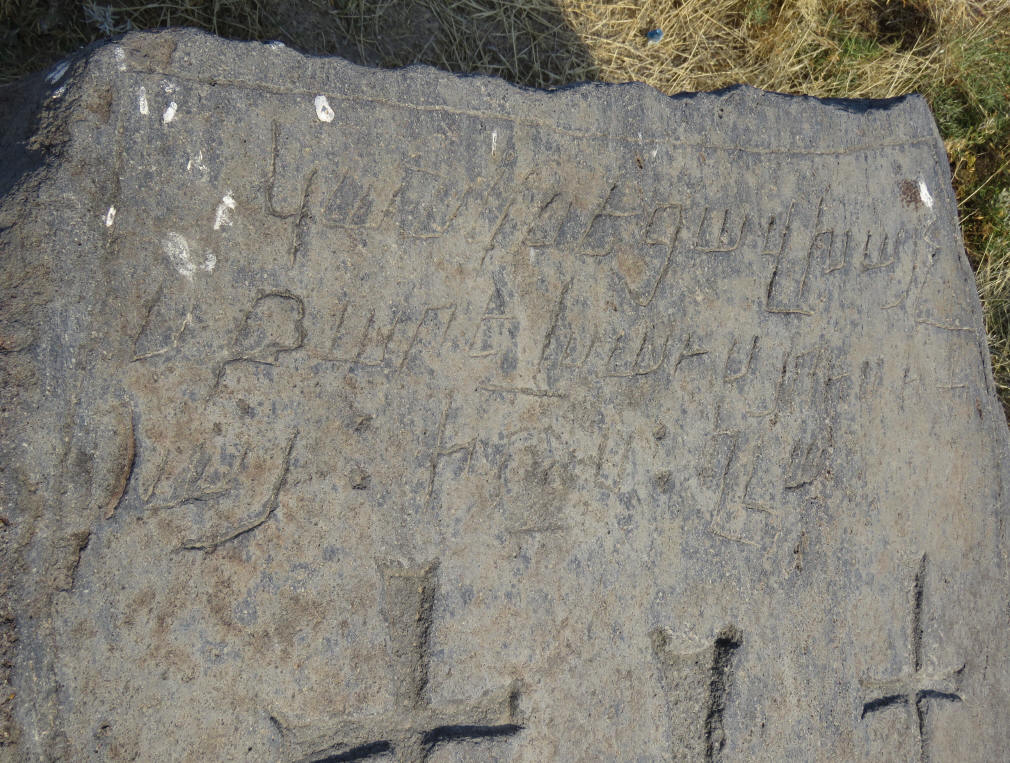
Above: Armenian writing states: "The cross
was placed. Saint intercessor Hoosig. Armenian. 29 : 731 or
531" (year AD)
Hoosig was martyred in 347 AD.
We thank Marta Francis for translating this for us into English.
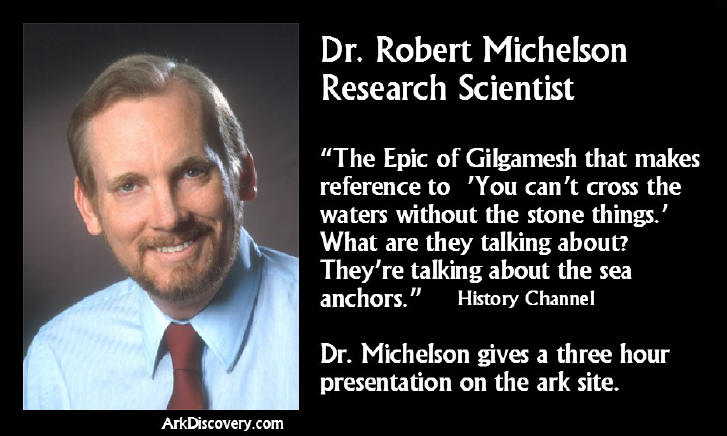
Dr. Michelson has produced several videos on
the ark site and can be seen here:
www.Arkdiscovery.com/michelson.htm
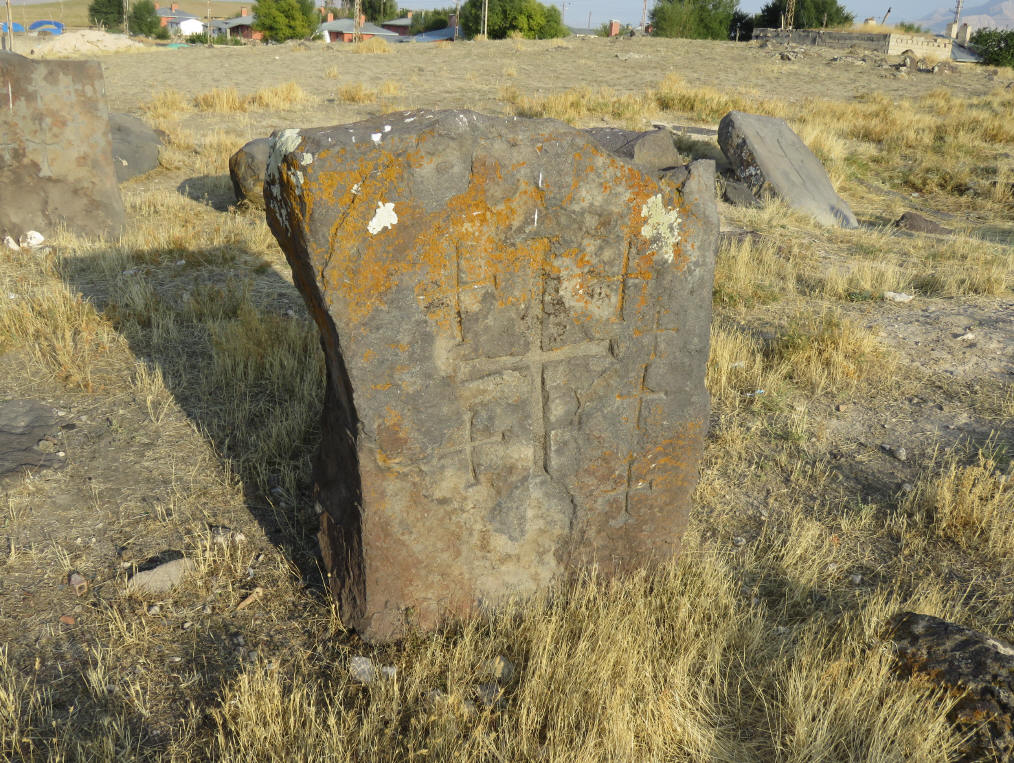
Above: Large cross is for Noah and six other crosses.
One probably broken off.
Above: Stone with possible image of the tower of Babel,
per Ron Wyatt.
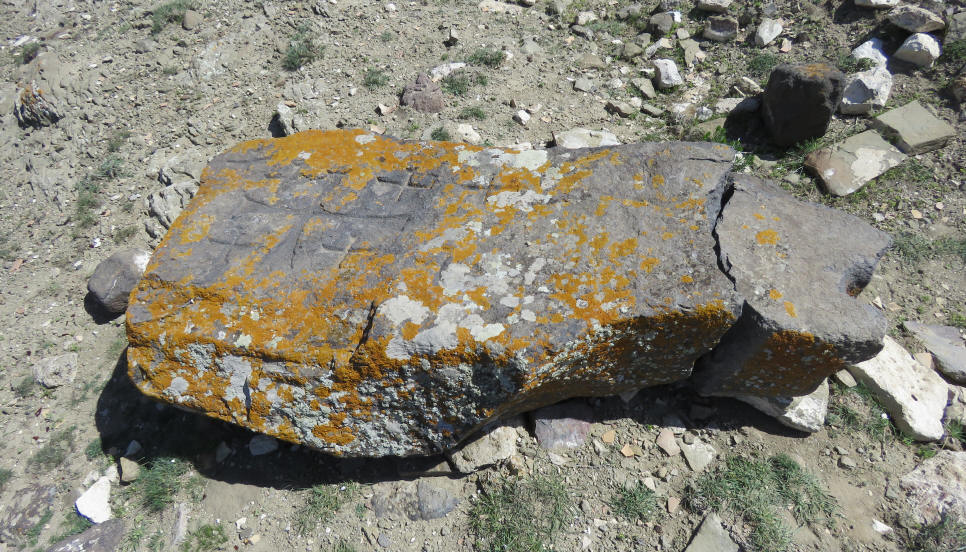
Above: On a hilltop outside the village of Arzep is this
stone with Crusader style crosses inscribed on it. The hole is broken on
the right.
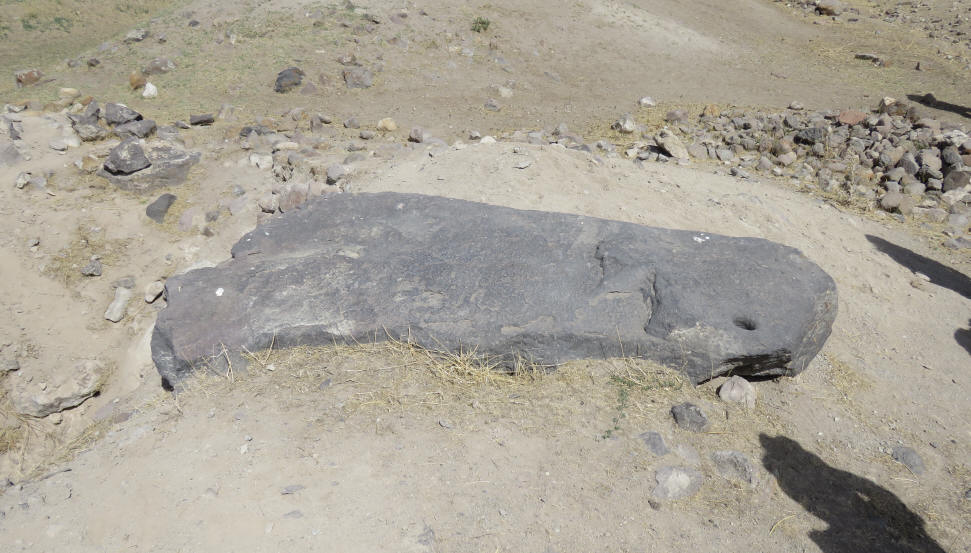
This stone is out in the countryside and does not have
crosses. Perhaps it was uncovered at a later date.
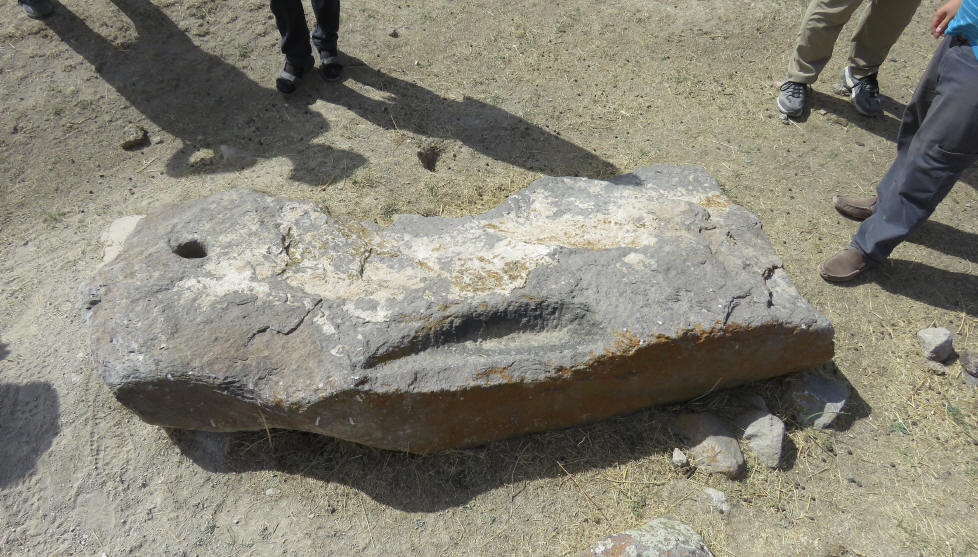
Above: Another out in the countryside
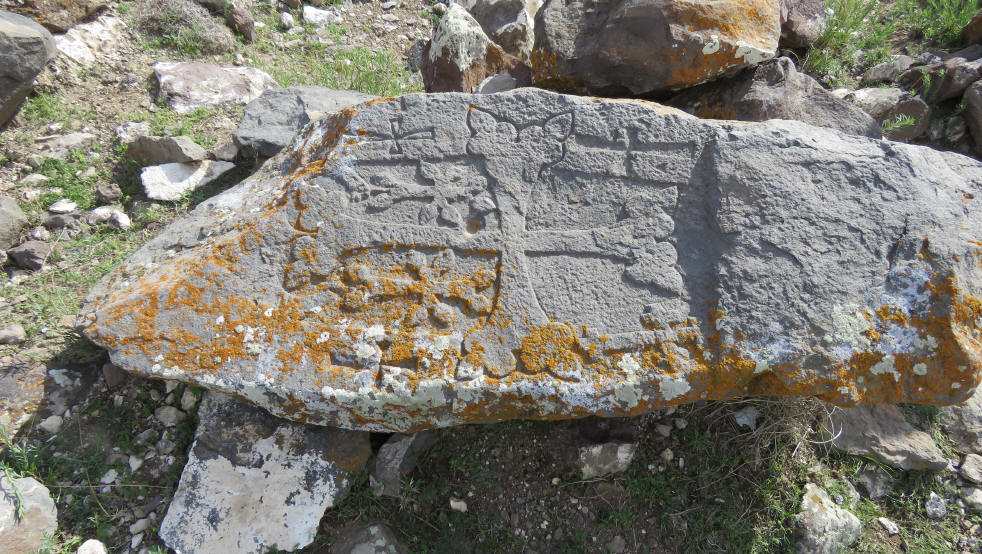
Above: Another stone out in the countryside. I
believe the top on the left was broken off which had the hole drilled through.
This stone
is one of the most ornate, in the Byzantine style.
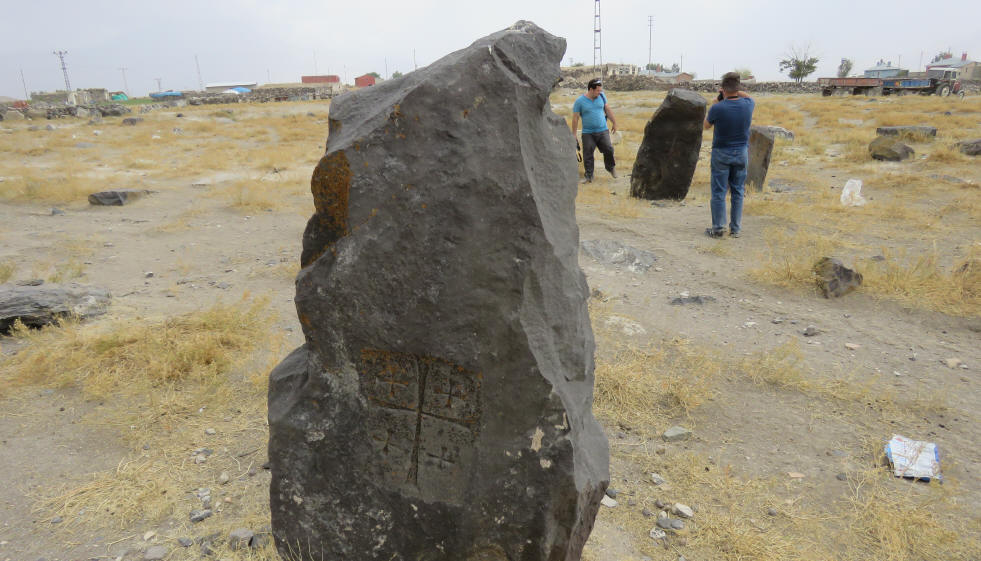
Above: Hole is broken off on the top right.
Mud Brick Wall in Arzep
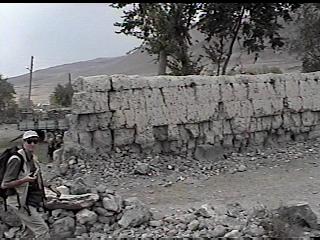
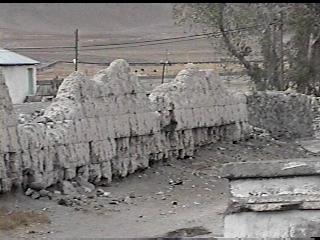
Ancient wall made of extremely large mud bricks originally had a
tile mural on it depicting Noah and the ark. Ron Wyatt saw this in 1977,
but when he returned the next year in 1978 the tiles had been removed and sold. One of the
locals in the village, remembers the tiles. Small bits of tile have been
found at the base of the wall. Sadly, most of this ancient singular wall
was destroyed in 2003 by an earthquake. Photos above are
from 2000. In 2018, Kevin Fisher was able to locate two remaining segments
of the wall shown below. The bricks are about 24 inches in diameter and
have broken pottery and bones mixed in the bricks.
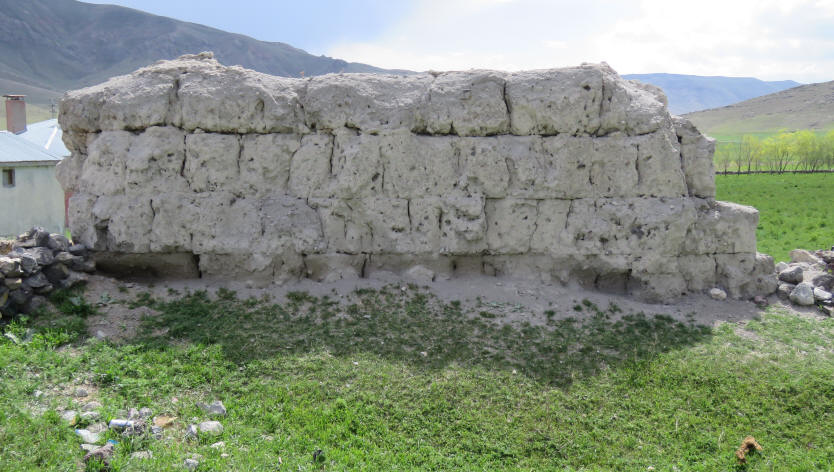
Perhaps this wall was built soon after the Flood to surround
the village and protect the locals from attacks from wild animals.
Possible "covering" stone used on Noah's ark
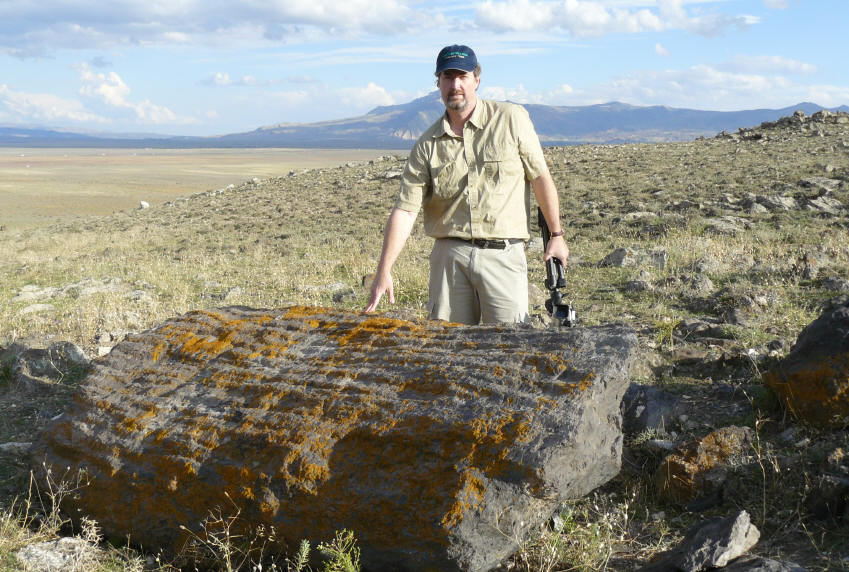
Above: Kevin Fisher stands next to this large stone-like object
that
and may be the covering Noah removed from the ark as the waters were
receding.
It is located a half mile from the Arzep village. When knocking on the
stone it emits a hollow and high pitch.
Large cross can be seen at left. Seven crosses can be seen on its surface.
Early Christians placed
them on this because they linked it to the ark and the Bible.
Noah's home near the village of Arzep
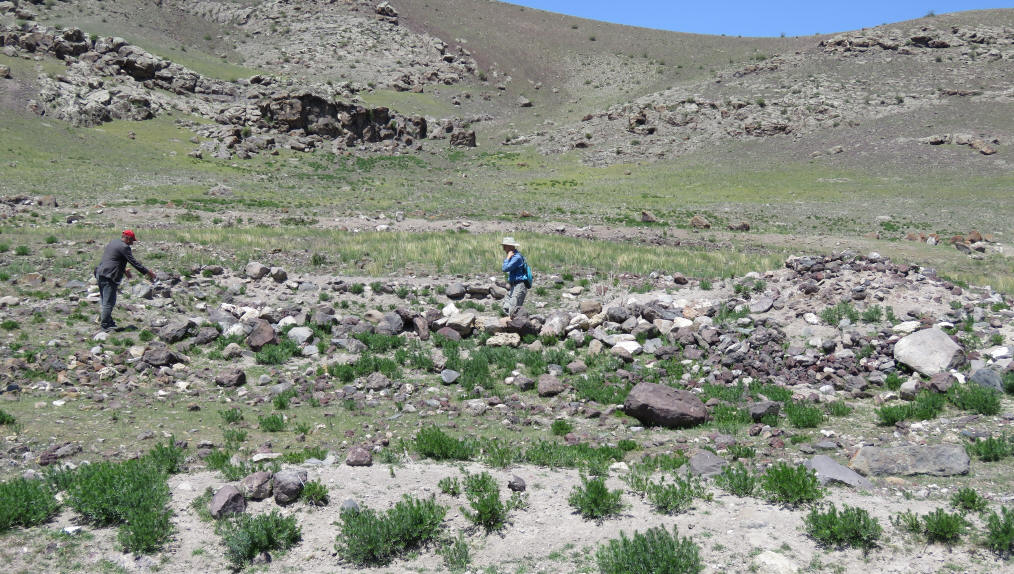
Above: Ruins of Noah's home or memorial structure.
Noah's altar in the background. Notice large stone in foreground with two
crosses.
In the background is a
line of stone fencing that Noah erected to contain animals. We are told in
Genesis that he practiced husbandry.
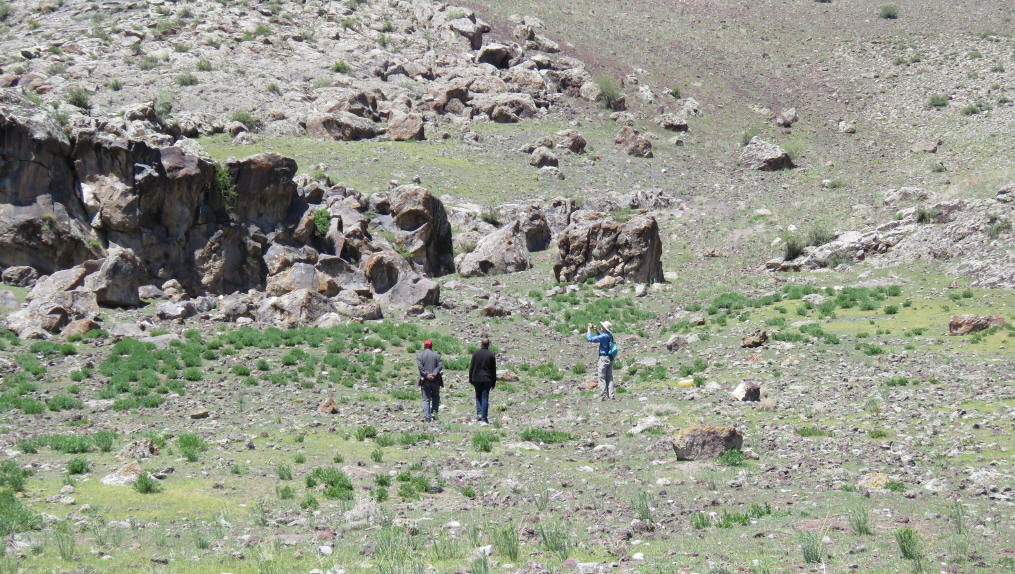
Above: Noah's altar stone in center right, with
sacrificial animal corral to the left
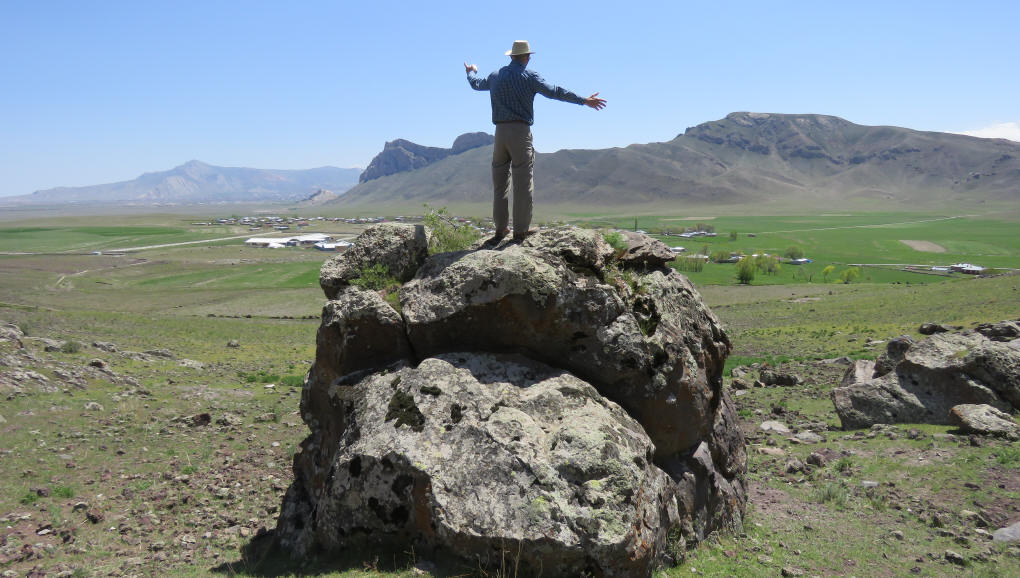
Above: This stone would have been waist high for Noah,
and he would have faced the valley and preached to tens of thousands about the
antediluvian world
and the destruction of the world from the Flood because of sin.
Read the story behind Ron Wyatt's work on
Noah's Ark:
Ron Wyatt's Newsletters
on Noah's Ark
|